Good news…come on Bouvet
😊
Bill Priakos – W5SJ
10 Free Ferry Heights
Fort Smith, AR 72903
479.461.8368

SUNSPOT COUNTS HIT A 9-YEAR HIGH: In a continued sign of strength for Solar Cycle 25, sunspot counts just hit a
9-year high. This plot from NOAA shows how the monthly sunspot number skyrocketed in January 2023:
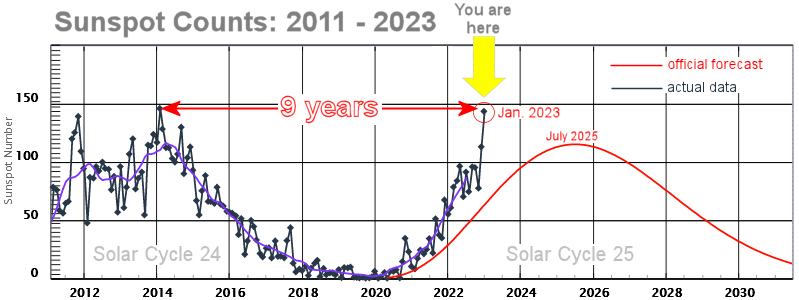
The monthly sunspot number of 144 in January 2023 was only percentage points away from topping the previous solar cycle, Solar Cycle 24, which peaked in Feb. 2014 with a monthly value of 146.
Originally, forecasters thought Solar Cycle 25 would
be about the same as Solar Cycle 24, one of the weakest solar cycles in a century. Current trends suggest Solar Cycle 25 will surpass that low threshold, at least. Solar Maximum is not expected until 2024 or 2025, so it has plenty of time to strengthen further,
bringing X-flares, geomagnetic storms and auroras. You can follow the progression here.
|
Solar wind
X-ray Solar Flares
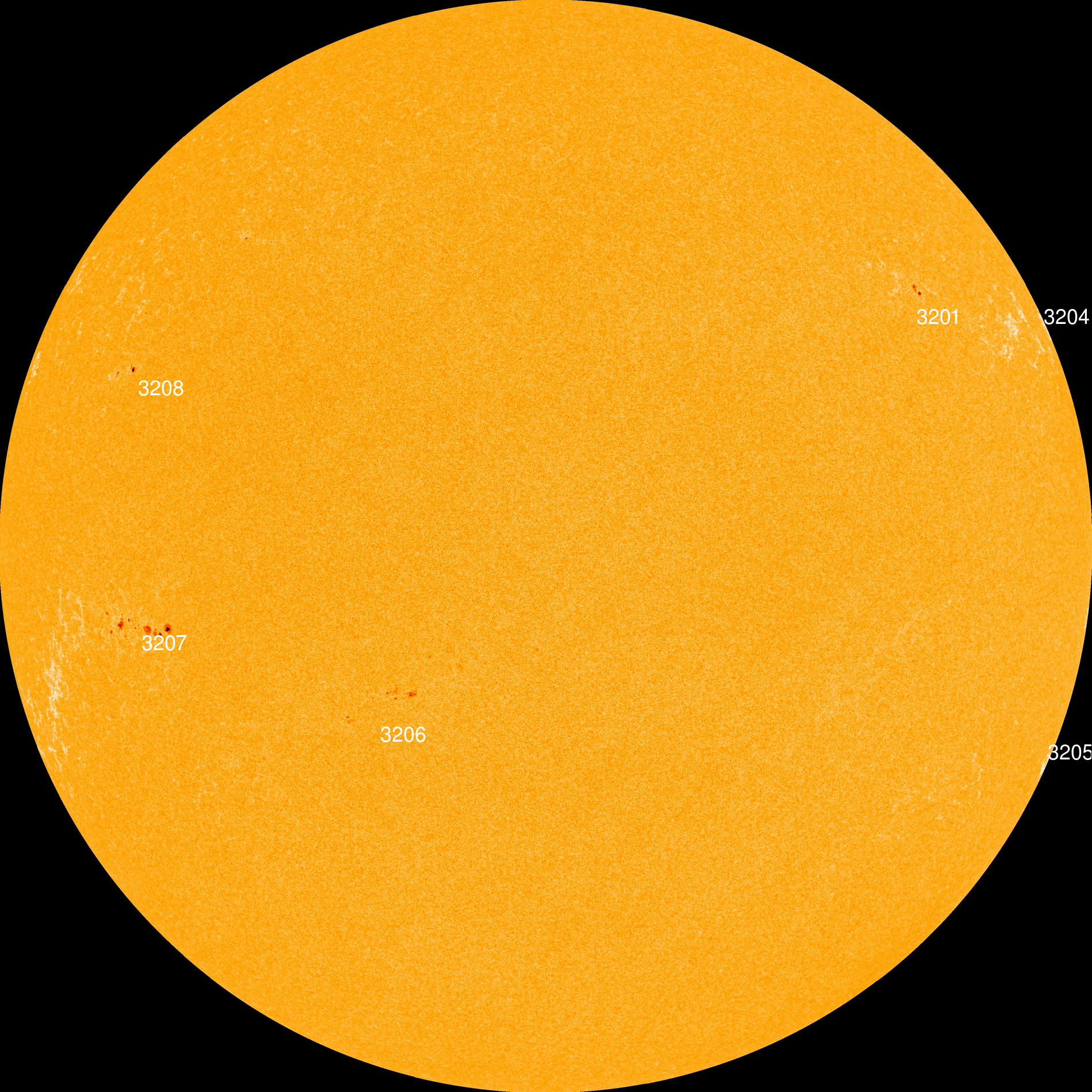
Daily Sun: 02 Feb 23
Sunspot AR3207 is growing but it does not yet pose a threat for strong flares. Credit: SDO/HMI
Sunspot number: 89 The Radio Sun
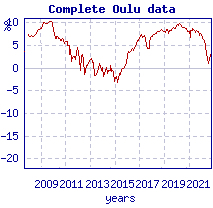
Cosmic Rays Solar Cycle 25 is beginning, and this is reflected in the number of cosmic rays entering Earth's atmosphere.
Neutron counts from the University of Oulu's Sodankyla Geophysical Observatory show that cosmic rays reaching Earth are slowly declining--a result of the yin-yang relationship between the solar cycle and cosmic rays.
Switch to: Europe, USA, New Zealand, Antarctica
Planetary K-index
Interplanetary Mag. Field
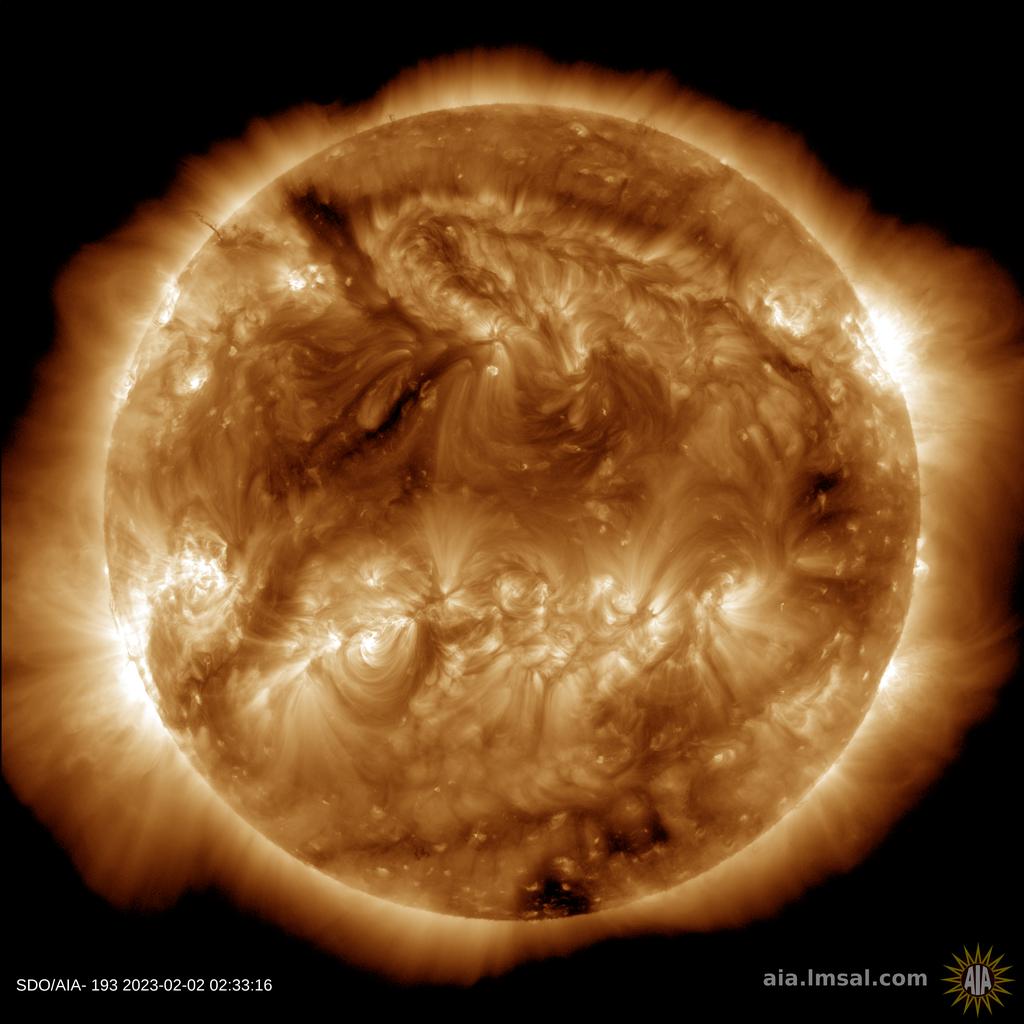
Coronal Holes: 02 Feb 23
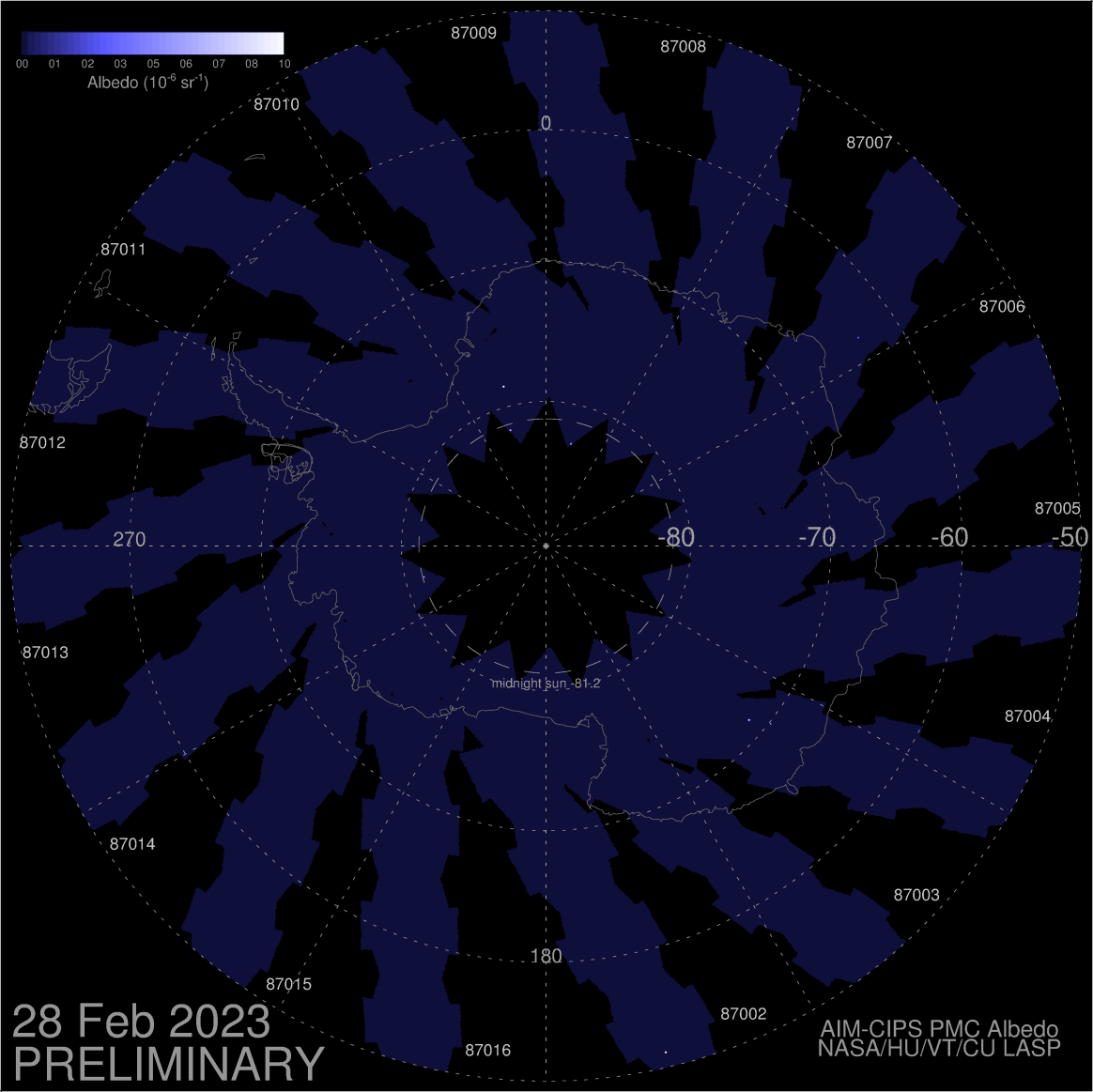
Noctilucent Clouds
Switch view:Ross Ice Shelf, Antarctic Peninsula, East Antarctica, Polar
Updated Feb01
Updated at: 2023 Feb 01 2200 UTC
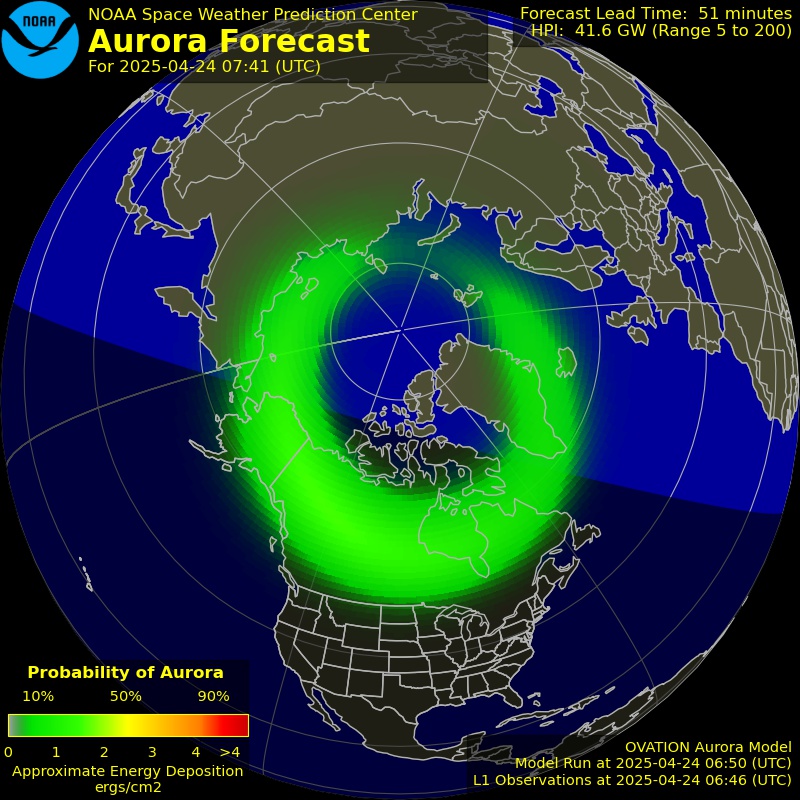
Geomagnetic Storms:
Updated at: 2023 Feb 01 2200 UTC
Mid-latitudes
High latitudes
|
|







SpaceWeather.com